
MolSoft offers advanced structure-based generative AI tools for molecular design and lead optimization. groupGen and LigandAIDE combine 3D protein-ligand structure information, neural networks, molecular docking, and chemical optimization to generate new compounds directly within a protein binding site.
Rather than generating molecules without considering the target structure, these methods use the local 3D environment of the binding pocket to guide molecular modifications. This allows new chemical groups and ligand structures to be designed to complement the shape, electrostatics, hydrophobic regions, and other properties of the target binding site. The tools can be used either to optimize an existing lead compound or to progressively grow small fragments into larger, more complete lead molecules.
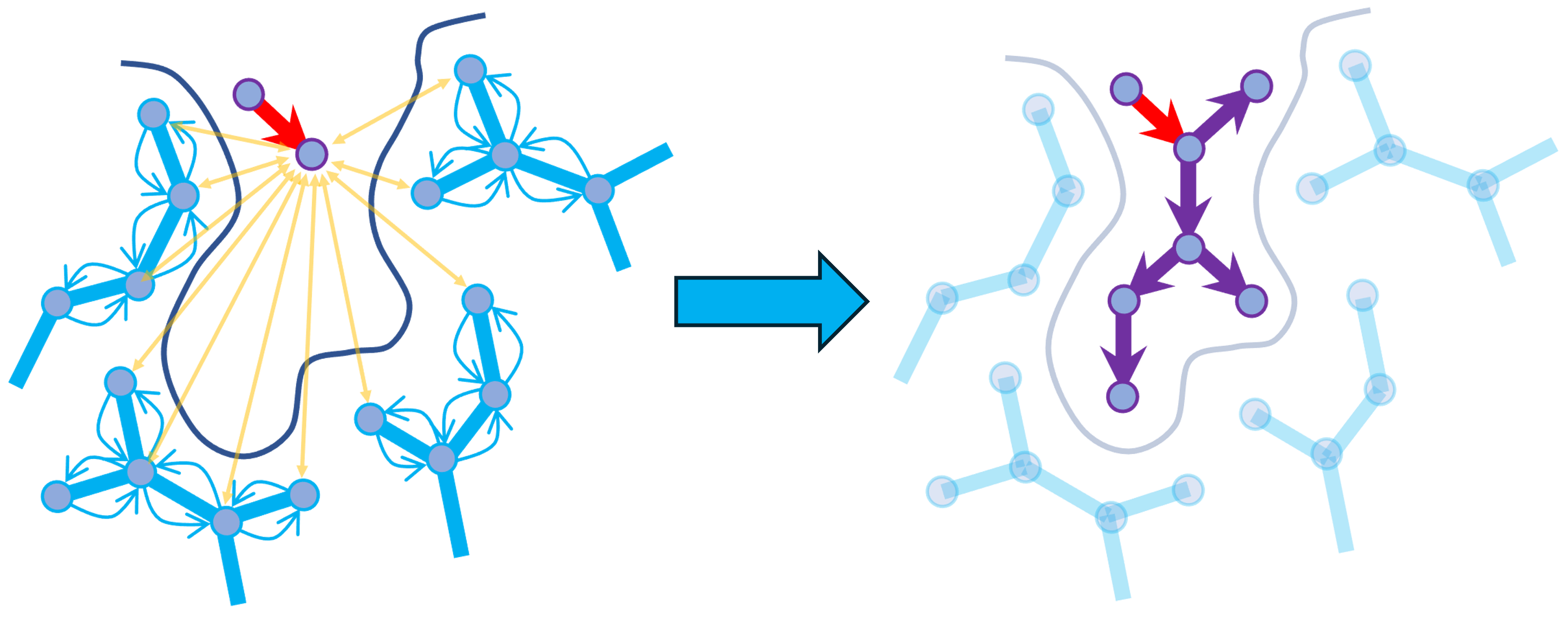
Starting with a ligand containing a defined attachment point, groupGen analyzes the surrounding protein binding pocket and generates chemically reasonable substituents that are tailored to the available 3D space.
For example, a chemist can retain the core of a known ligand while asking groupGen to explore alternative substituents at a selected position. The resulting compounds can then be docked and scored to identify modifications that may improve binding affinity, interactions, or other desired properties.
This provides a practical way to explore chemical space while maintaining the important binding interactions of an existing lead.
Ligand AIDE is a de novo ligand generation workflow based on Artificial Intelligent Design Evolution. It uses an iterative evolutionary strategy to grow and optimize ligands directly in the context of a protein binding site.
The process begins with a population of docked small fragments. From this starting point, new designs are generated by adding or replacing R-groups using the groupGen neural network, as well as by performing atom-level substitutions using the Atom Predictor. Each newly generated cohort of compounds is then re-docked into the binding site.
Designs are refined through multiple evolutionary cycles, typically three to five iterations. At each step, a Darwinian selection process removes poor designs based on several criteria, including RTCNN scores, physics-based binding scores with penalty terms, drug-like property filters, and synthesizability.
Through successive generations, fragments evolve into more complete and optimized ligands. This iterative grow-and-select strategy enables efficient exploration of chemical space while maintaining binding quality, drug-like behavior, and practical synthetic feasibility.

© 2026 All Rights Reserved MolSoft LLC Terms of Use | Privacy Policy


